Shelly emailed me to say she wanted to talk with me about a project. Shelly had been an administrator at the college where I used to teach. Both out of habit as a faculty member approached by administration and out of admiration for her, I agreed to meet.
Would I be interested in illustrating a children’s book?
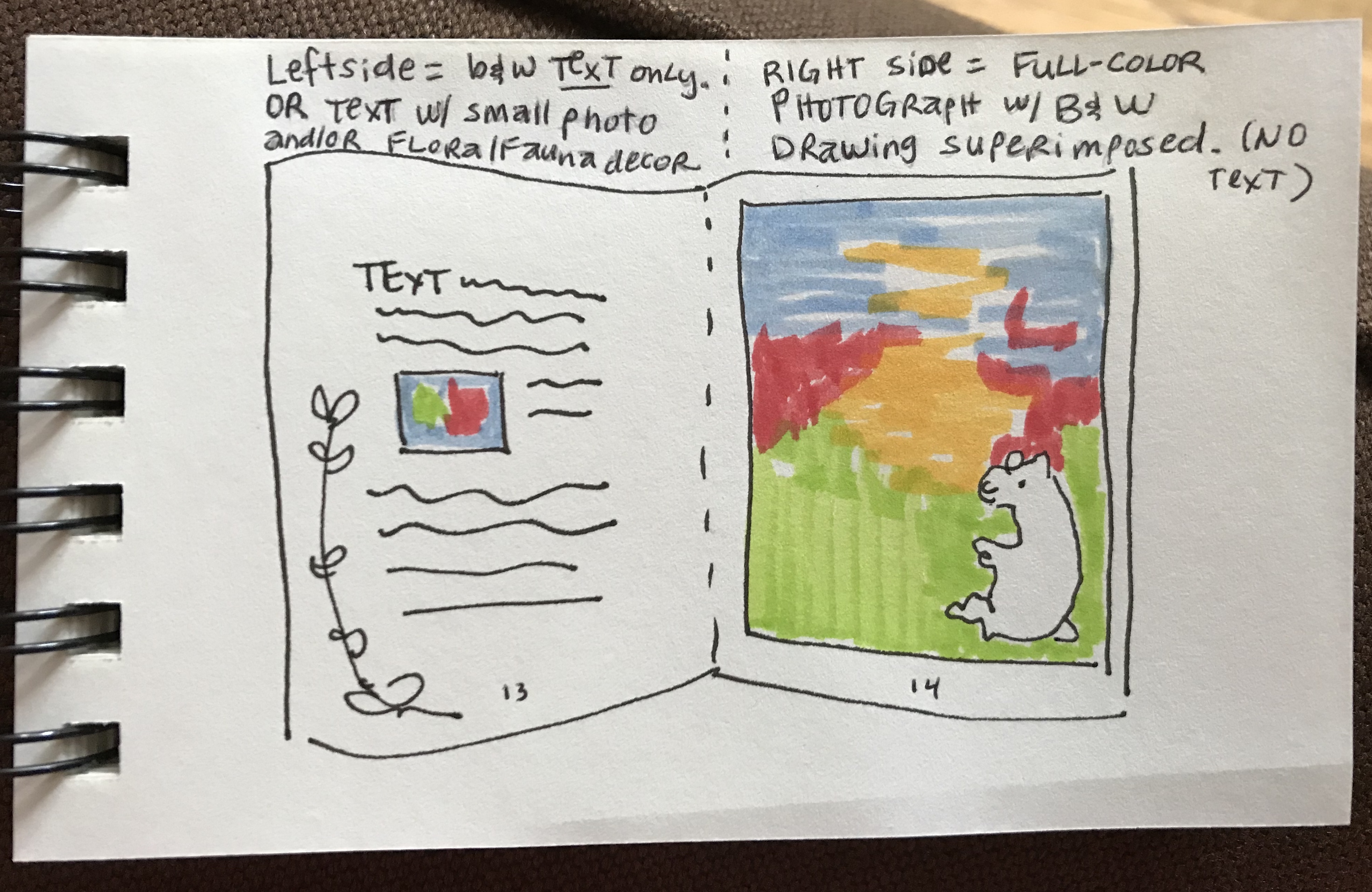
Truthfully, I wanted to say no. My life was just opening up space for me to explore what would be next for Carrot Condo. However, I wanted to work with Shelly, to soak in her vibrancy and vision. I agreed to a second meeting. This time, Judy joined us.
If you’ve been following along, you know Judy as the main character of our book. However, I knew Judy from my teaching years, and I was intimidated. She was on the Board of Education. I remember giving presentations to the board, all of them in suits, lined up in a row, listening intently or with scrutiny, I couldn’t say for sure.
Well, “administrator Shelly” and “Board member Judy” quickly faded into the background at our second meeting. Just as poised as ever, Judy told us riveting stories about her life at Camp Sherman. I was spell bound. I took six pages of notes.
I don’t know that I ever said yes to this project, but clearly, I wasn’t saying no.
Then, Shelly and I experienced four major pivots:
One month after our meeting with Judy, everything shut down due to Covid-19. I don’t know where our tenacity came from, but Shelly and I immediately figured out how to meet online, first with me holding my phone so awkwardly my arm went numb and I gave myself vertigo, but how else to show her my face and my sketches at the same time? We got better with each meeting and maintained this remote connection for 18 months.
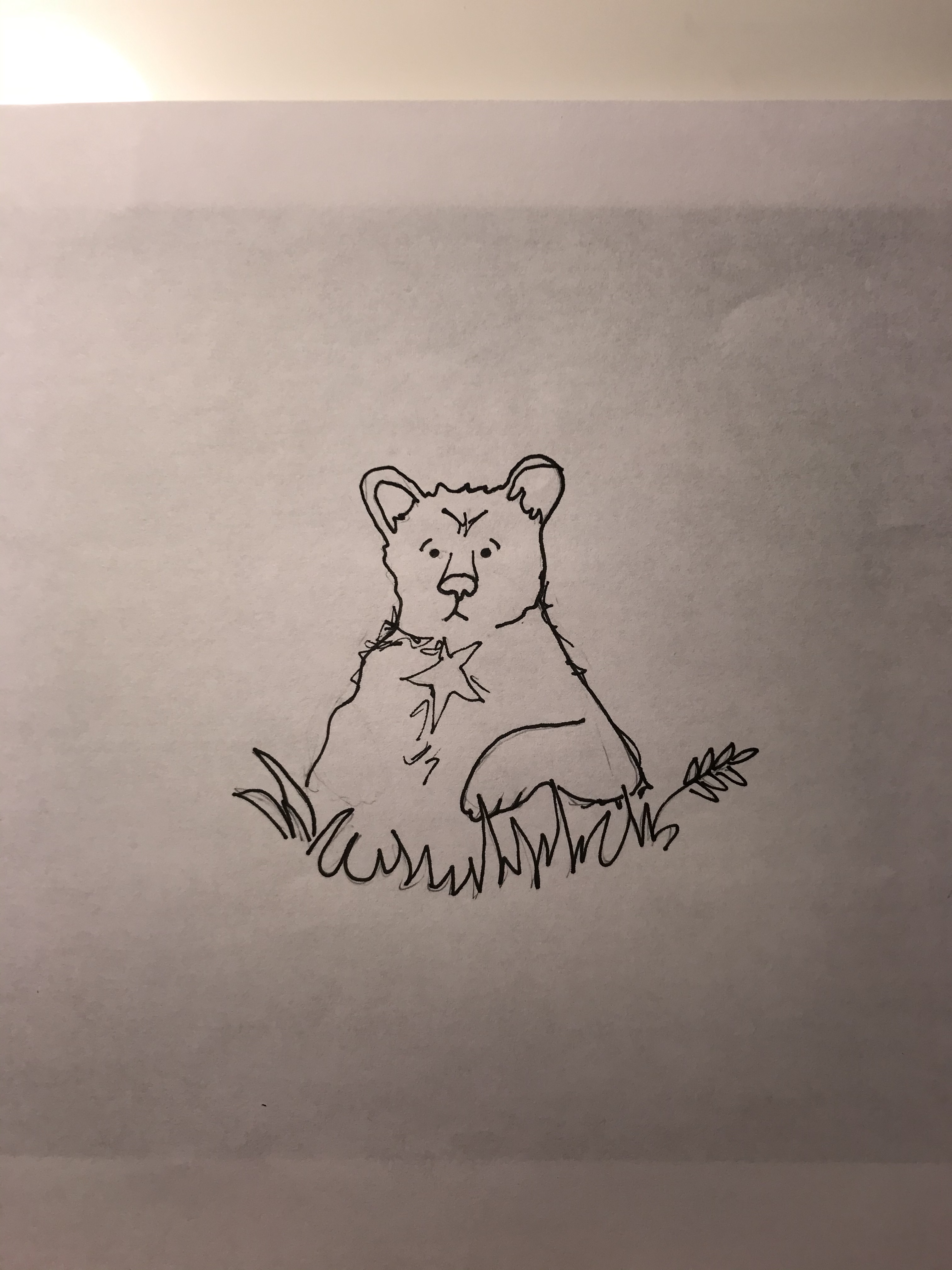
The second pivot mostly affected me. I’d had a vision of my illustrations in bold black and white against the colorful backdrop of Shelly’s photographs. I really loved this idea, thought it made our book unique, and I even managed to create an example after taking a tedious and difficult online Photoshop class.
Shelly liked the idea too, at first. As I drew, she researched children’s books, consulted some other artists and friends, and came to a truth she managed to deliver to me gently but unwavering:
The illustrations needed to be in color.
This sounds like no big deal now, but back then it felt hard. Not only did I have to let go of my black-and-white idea–just for one or two drawings to give it a try–I had to face a fear. Although I love working with pens and ink, I felt sure that coloring in ink would make my drawings shift from whimsical to cartoony. I especially worried about getting the fictional Judy’s face and skin tone looking right and not streaky or too heavy.
The challenge forced me to learn a bit more about pens and ink, and I found a way to blend pens a lot like watercolor. The process transfixed me, and time flew by as bear fur swirled into something vivid but believable and Judy’s face became just rosy enough. Full color it would be.
Our third pivot felt more like a breakthrough and a friendship:
All of these illustrations were drawn by hand on paper. Nothing digital. All of it to scale. Shelly would mail me prints of her photos, I’d lay my drawing paper on top, put it all on a light table, and draw the animals and characters into the photo. This worked, until it didn’t. Some images were just so, so tiny they looked ridiculous drawn so small.
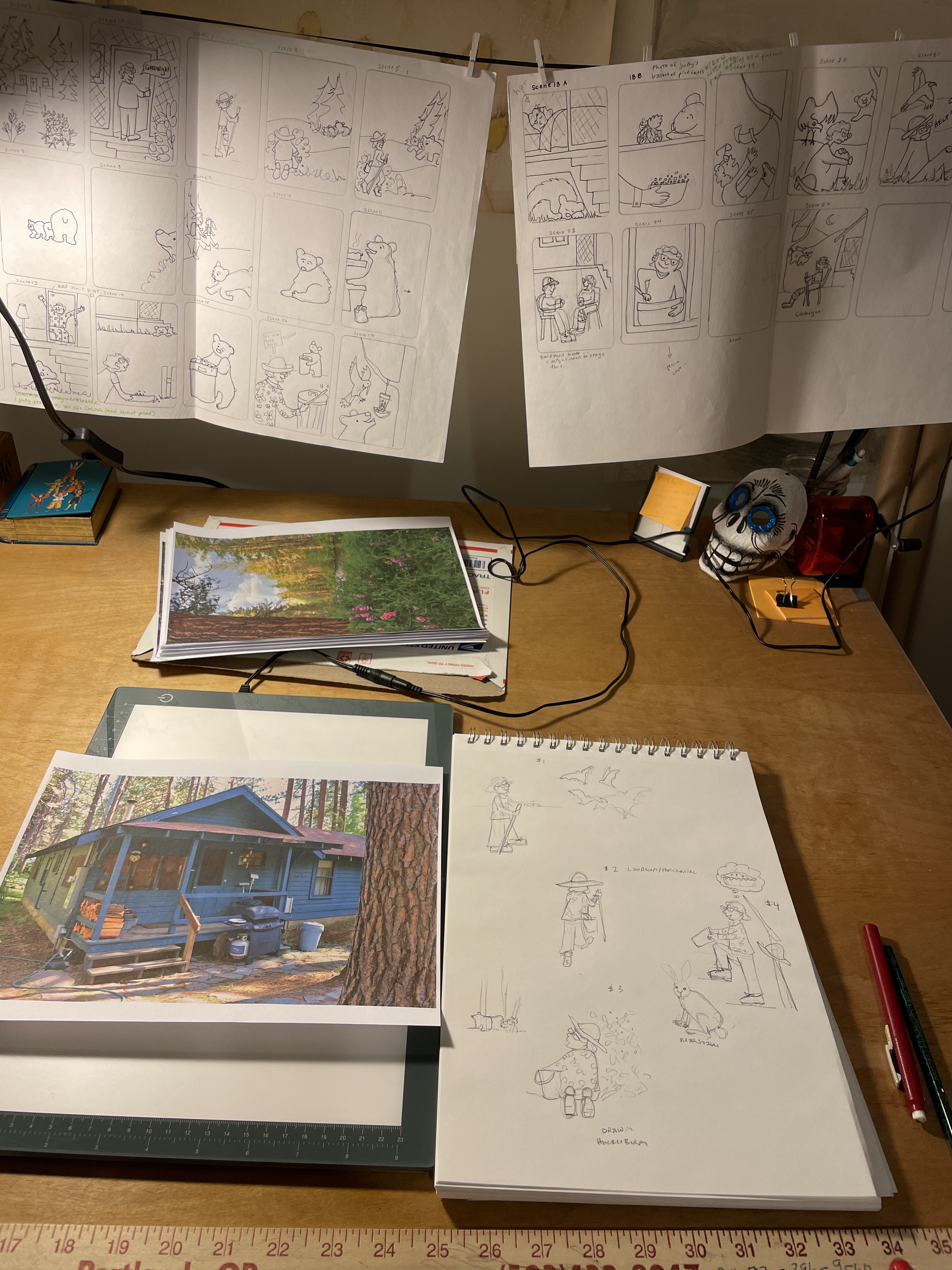
Shelly and I both experimented with different programs, like Photoshop, to figure out how to combine her photos with my illustrations, but this was taking us down a techy-road neither of us really wanted to be on.
I asked for advice at impress, the company that does all of my printing. Erik said he might be able to help, and at this point it was safe to meet in person again, so we gathered outside his shop and showed him our work so far.
Turns out, not only was it easy for Erik to scan my illustrations and expertly nestle them into Shelly’s photographs, he had an eye for color and font and layout, and he felt personally connected to our story. He told us he’d spent much of his childhood in a place a lot like Camp Sherman. We not only had his expertise, but his enthusiasm too.
A that point, you’d think the rest would go smoothly. Even so, Shelly and I hit a mysterious lull. Separately, we both kind of lost connection to the project. We didn’t know this about each other, but Shelly noticed how long it had started to take me to finish the last few illustrations.

One day, I received a text from Shelly telling me, absolutely graciously, that it would be okay if we quit the project. We’d learned a lot, accomplished a lot, but we did not have to force ourselves to keep going. Final pivot: put it on the shelf and call it a good try and a fun adventure? I thought about it.
Instead, that option–to quit–felt like it opened all the doors and windows in a small, stuffy house and let in fresh air. It gave us space to reconsider the whole book and our reasons for doing it–which had changed. I mean, we’d been through a pandemic, and grown as we learned more about writing, illustrating, and publishing.
The option to say “no,” brought us to an exuberant and resounding YES instead. From that point on, there was no stopping us. We really pushed to the end, leaping over hurdles in our way. In fact, our text messages from those months almost always included race-car emojis. We could see the finish line, and it felt great.
Before taking on a creative project, I always want to know: will it work out? Will it succeed? Of course, we never know this in life, but I wish for it anyway. With this book collaboration and the goal of a published book so far into the future, I learned to notice and catalog the experience as we went along. Sort of like collecting gems and power-ups as you navigate your way through a video game.
I carry this habit with me into new projects. Whether it seems to be working out or not, what has already been achieved? New skills? Better skills? New connections? New information? New ideas? Friendships? Adventures?
As for Judy, Shelly, and our fictional bear (based on a real fawn), it’s nice to see our book on my shelf, reminding me of a long, grand, quiet adventure just now concluding.
Judy and Little Bear is available until it runs out!
Thank you for following along!
–Trista
Discover more from Carrot Condo by Trista Cornelius
Subscribe to get the latest posts sent to your email.

I was transfixed reading this. Absolutely love devery twist and turn! So glad it was an enthusiastic YES and the book was born. Love it!
LikeLike
Thank you!! Fascinating that thinking no and then considering quitting were both key moments of motivation and creativity.
LikeLike
What a unique and challenging project to work on. Maybe more will follow.
LikeLike
Yes–unique and challenging, that sums it up perfectly. I’m open to future collaborations…we’ll see!
LikeLike
coins! coins! way to power through. congratulations! ❤
LikeLike
Ha! Exactly–collect all the coins, and you’ve got treasure whether you win or come in last!!
LikeLike